Femboy: More Than Just a Look – A Glossary of Style, Identity, and Expression
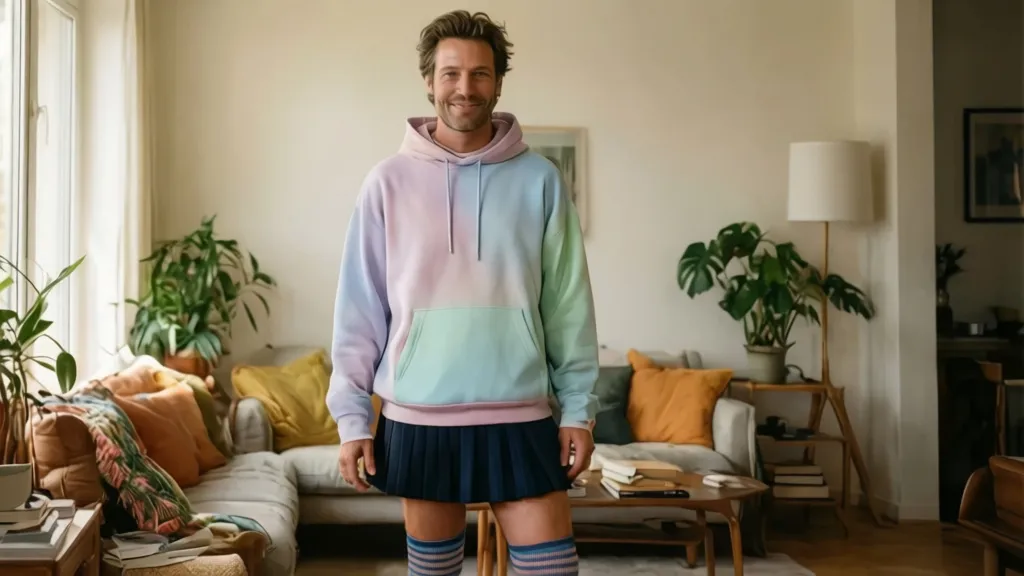
The Femboy Look: More Than Just a Dress
Imagine someone effortlessly bridging masculine and feminine forms of expression. Perhaps they wear a cute skirt, paired with a casual T-shirt and striking accessories. This is the essence of what many refer to as a “Femboy.” A term that has gained increasing visibility in recent years, especially in online communities and pop culture. But what exactly is behind it? Is it just a matter of clothing, an aesthetic, or something deeper?
At its core, “Femboy” describes a person who identifies as male but has a strong inclination to adopt and present feminine clothing, makeup, behaviors, or a generally feminine aesthetic. This is not about abandoning one’s male gender or identifying as a woman. Rather, it is a conscious and often creative expression of one’s personality and identity that transcends the boundaries of traditional gender roles.
A Spectrum of Femininity: Not Just Clothes Make the Person
The range of what constitutes a Femboy is vast. For some, it may mean regularly wearing dresses, skirts, stockings, or feminine tops. For others, the focus is on more subtle elements: a touch of lipstick, a carefully styled hairstyle, delicate jewelry, or the way they move and gesticulate. It can also be the choice of everyday clothing that combines elements of both – think of a casual hoodie paired with shorts and stockings, or an elegant shirt with a feminine skirt.
Important: There is no uniform appearance. A Femboy might cultivate a rather sweet, playful look, while another prefers a more androgyne or even dramatically feminine aesthetic. Clothing is often a tool to express oneself and feel comfortable. It is a form of Gender Expression that consciously deviates from the expectations of traditionally masculine appearance.

Distinction: What a Femboy Is NOT
To grasp the term more clearly, it often helps to understand what it is not. A Femboy generally identifies as male. This distinguishes them from trans women, who identify as female. Likewise, it is not the same as drag, which often involves a performative and temporary adoption of a female identity for the stage or special occasions. A Femboy style can be part of daily life and personal identity, not just a performance.
The terms “Sissy” and “Femboy” are also sometimes confused or used synonymously, but there are differences. While “Sissy” often places a stronger focus on submissive or extremely feminine roles and sometimes carries negative connotations, “Femboy” is broader and emphasizes the expression of femininity and aesthetics, often with a charming undertone. The boundaries can be fluid, and it strongly depends on individual self-definition.
Good to know
The terms surrounding gender identity and expression are diverse and constantly evolving. What is called a Femboy today may acquire nuances tomorrow. Always respect a person’s self-definition. If someone calls themselves a Femboy, that is their truth.
Why This Expression? Reasons and Motivations
The motivations for expressing oneself as a Femboy are as individual as the people themselves. For many, it is a way to free themselves from the often rigid and restrictive expectations of masculinity. They discover that they feel more comfortable, confident, and authentic in feminine clothing or through feminine forms of expression. It can be a form of self-discovery and personal growth.
Your Community. People who understand you.
Do you want to make new contacts and connect with like-minded people? Discover the community at SMKontakt and meet people with similar interests near you.
Offer for adults aged 18 and over.
Some simply enjoy the aesthetic. They find feminine fashion appealing, love the fabrics, the cuts, the colors. It can also be a playful engagement with gender norms, a way to turn the world upside down and show that clothing doesn’t have to know fixed gender boundaries. For others, it is an important part of their identity that allows them to live and show all facets of their personality.
Femboy in Everyday Life and Online
Especially online, on platforms like TikTok, Instagram, or Reddit, a vibrant Femboy community has formed. Here, people share their outfits, their thoughts, and their experiences. This not only creates visibility but also a space for exchange and support. It is a place where one finds like-minded people and feels understood.
In real life, the expression can vary. Some live their Femboy identity openly and confidently by wearing feminine clothing in everyday life. Others prefer to live out this aspect of their personality in private spaces or in specific social contexts. The courage to show oneself as one is can be inspiring, and it is important that such expressions are treated with respect.
Also relevant: Glossary: What does ‚Gender Expression‘ mean?
Frequently Asked Questions (FAQ)
Is a Femboy homosexual?
Not necessarily. Sexual orientation and gender expression are two different things. A Femboy can be heterosexual, homosexual, bisexual, pansexual, or asexual. Feminine clothing or aesthetics say nothing about sexual attraction.
Is Femboy a derogatory term?
Originally and in some contexts, the term can be used pejoratively. However, in the communities that claim it for themselves, it has become a term of self-designation and pride. It is important to consider the context and intention. If someone refers to themselves as a Femboy, it is meant positively.
Does a Femboy always have to be young?
No, that’s a cliché. Femboy style and expression are not tied to a specific age. There are people of all ages who express themselves with feminine elements and identify as a Femboy.
Is Femboy the same as crossdressing?
There are overlaps, but it is not the same. Crossdressing often refers to wearing clothing typically associated with the opposite gender and can have many reasons, including personal preference or as part of a performance. Femboy describes more of an identity or a permanent style where a male-identified person integrates feminine elements into their presentation. Many Femboys do not consider their appearance to be “crossdressing” but rather an expression of themselves.











No Comments found